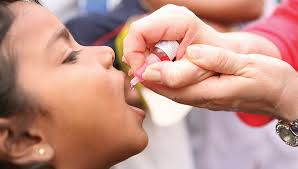
ORAL POLIO

In Stock (10000000 items)
Ksh250.00 Ksh200.00

The oral polio vaccine (OPV) is a live, weakened-virus vaccine given as drops in the mouth that protects against polio. It provides strong gut immunity, which is effective at stopping the spread of the virus in a community, but in very rare cases, the weakened virus can mutate and cause paralytic polio. The bivalent version protects against types 1 and 3, and it is used in conjunction with the inactivated polio vaccine (IPV) in many countries, such as the United States, which no longer uses OPV. Read more

Tags:
SKU: #bVEXzR0e0p
The oral polio vaccine (OPV) is a live, weakened-virus vaccine given as drops in the mouth that protects against polioIt provides strong gut immunity, which is effective at stopping the spread of the virus in a community, but in very rare cases, the weakened virus can mutate and cause paralytic polio. The bivalent version protects against types 1 and 3, and it is used in conjunction with the inactivated polio vaccine (IPV) in many countries, such as the United States, which no longer uses OPV.  
How it works
  • The live, weakened virus in the OPV replicates in the intestine, prompting the body to create antibodies.
  • This creates immunity at the intestinal surface, preventing the virus from spreading further and protecting against polio.
  • A benefit of this type of immunity is that the vaccine virus can be shed, which can expose and immunize others in the community—a phenomenon called contact immunity. 
Benefits and drawbacks
  • Benefits: 
    OPV is very effective at stopping person-to-person transmission and is useful during outbreaks to protect a community quickly. It is also inexpensive. 
  • Drawbacks: 
    In extremely rare instances, the attenuated (weakened) virus can mutate and regain virulence, leading to a risk of paralysis, known as vaccine-associated paralytic polio (VAPP). This risk is significantly higher in areas where OPV is used extensively in the absence of widespread IPV vaccination, which is a key reason many countries have switched to IPV. 
Types and current use
  • Protects against poliovirus types 1 and 3. It is recommended for routine immunization schedules in many countries and is often given along with IPV. 
  • Protects against a single type of poliovirus. It is used during specific outbreak response campaigns. 
  • Protected against all three types but is no longer used globally after the April 2016 "OPV Switch" to prevent the very rare risk of vaccine-derived poliovirus linked to type 2. 
Side effects and safety
  • OPV is considered a very safe vaccine, with children being at a much greater risk from polio than any potential side effects from the vaccine. 
  • If a child vomits shortly after receiving the vaccine, an extra dose should be given once they have recovered. 
  • The other type of polio vaccine, the inactivated polio vaccine (IPV), is given by injection and does not carry the risk of vaccine-associated paralytic polio. 
Specifications Descriptions

Latest Reviews

No Review
0

You May Also Like

Chat with Doctor

Get 50% Discount.

Lorem, ipsum dolor sit amet consectetur adipisicing elit. Exercitationem, facere nesciunt doloremque nobis debitis sint?