MILK TEETH EXTRACTION(CHILDREN)

In Stock (10000 items)
Ksh700.00 Ksh500.00

A milk tooth (or baby tooth) should only be extracted by a dentist, except in cases where it is extremely loose and ready to fall out naturally. Read more

Categories: DENTAL CLINIC
Tags:
SKU: #D3OYDFwCiw
A milk tooth (or baby tooth) should only be extracted by a dentist, except in cases where it is extremely loose and ready to fall out naturally. Prematurely pulling a milk tooth can cause pain, bleeding, and potential damage to the permanent tooth underneath. 
When a professional extraction is needed
A pediatric dentist should perform an extraction in cases of:
  • Significant decay or infection: If a cavity is too severe to be repaired with a filling or crown, or if an abscess has formed, extraction is necessary to prevent the spread of infection.
  • Over-retained baby teeth: Sometimes a milk tooth does not fall out on time, blocking the permanent tooth from properly erupting. Removing the stubborn milk tooth creates the necessary space.
  • Trauma or injury: If a tooth is broken or severely damaged in an accident and cannot be saved, it must be removed.
  • Orthodontic reasons: A dentist may recommend removing one or more baby teeth to create space in preparation for braces or other alignment treatments. 
When to attempt at-home removal
At-home removal should only be attempted when the tooth is very loose and ready to come out naturally.
  • Signs it's ready: The tooth moves easily in all directions without causing pain or significant discomfort.
  • Safe method: Encourage the child to gently wiggle the tooth with their clean finger or tongue. If the tooth is ready, it will come out with minimal pressure. You can use a clean tissue or gauze to help with the final, gentle twist.
  • When to stop: If the tooth resists or the child experiences pain, stop and let it loosen more naturally. Avoid using string or other tools, as this can cause injury and infection. 
The dentist's extraction procedure
A pediatric dentist is trained to make the extraction process as comfortable as possible for a child. 
  • Anesthesia: A local anesthetic gel is often applied first, followed by a numbing injection. For more complex cases or anxious children, options like laughing gas (nitrous oxide) or IV sedation are available.
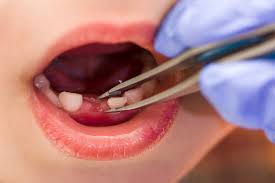
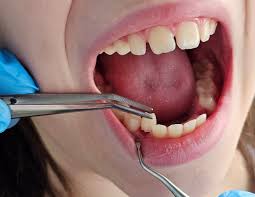
  • Extraction: The dentist will use small, sterilized tools like forceps and elevators to gently loosen and remove the tooth. For very difficult cases, they may need to make a small incision.
  • Post-extraction: After the tooth is removed, the child will bite down on a piece of gauze to help a blood clot form. For premature extractions, a space maintainer may be placed to ensure the permanent tooth erupts correctly. 
Aftercare following an extraction
Proper aftercare is essential for quick healing and to prevent infection. 
  • Gauze pressure: Have your child bite down on a clean gauze pad for about 20 minutes to control bleeding.
  • Saltwater rinses: After 24 hours, have your child gently rinse their mouth with warm salt water to keep the area clean.
  • Soft foods: For a few days, provide your child with soft foods and encourage them to chew on the opposite side of their mouth.
  • Avoid irritation: Tell your child not to rinse, spit, or suck on straws for the first 24 hours, as this can dislodge the blood clot.
  • Pain management: Over-the-counter pain relievers can be used for any soreness.
  • When to contact a dentist: Get in touch with a dentist if bleeding doesn't stop, or if you notice signs of infection like swelling, increased pain, or fever.
Specifications Descriptions

Latest Reviews

No Review
0

You May Also Like

Chat with Doctor

Get 50% Discount.

Lorem, ipsum dolor sit amet consectetur adipisicing elit. Exercitationem, facere nesciunt doloremque nobis debitis sint?